
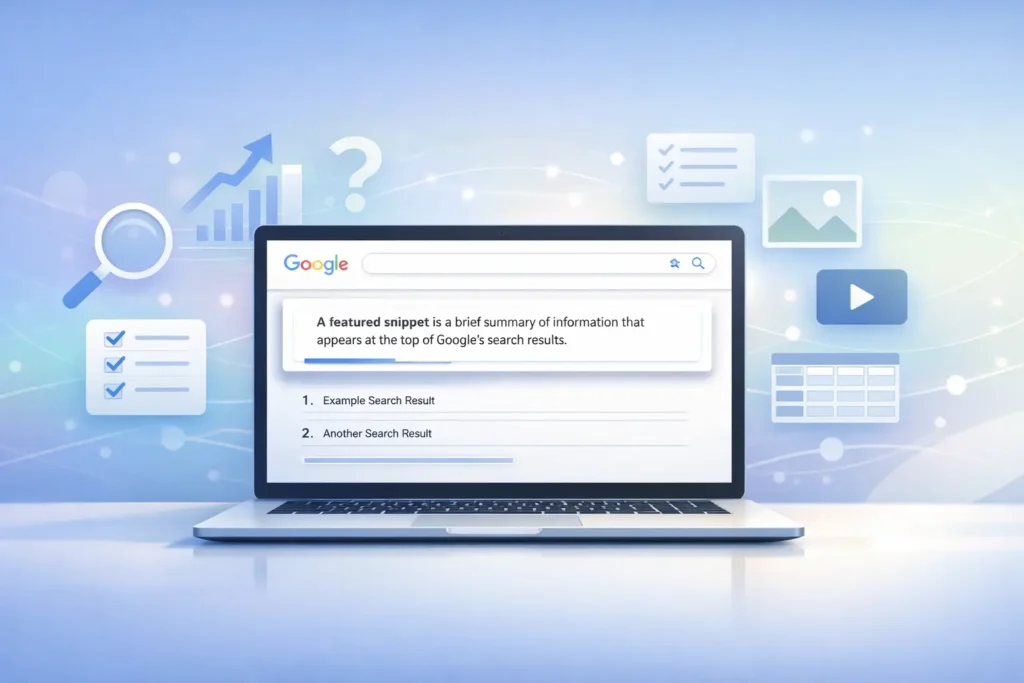
Ever wondered why some websites appear above Google’s #1 result—without paying a rupee?
With Organic searches – 94% and Featured snippets – 42.9% with highest CTR
Featured Snippet SEO is the process of optimizing content so Google selects it as the instant answer box displayed at the top of search results, also known as Position Zero. These snippets appear above traditional organic listings and provide quick, concise responses to user queries, increasing visibility, authority, and click-through rates.
Table of Contents
👉Do you know why?
When you search in a browser, you will notice that a box appears at the top of the page, displaying a brief section of the website with an instantaneous, simple response.
We refer to this box as the featured snippet.
Featured snippets are part of Google’s advanced SERP features, but they work best when your site follows strong SEO basics for beginners, including proper keyword usage, on-page optimization, and clear content structure.
What Is Featured Snippet SEO and How It Works
A featured snippet is a search preview that shows brief text excerpts at the top of search engine results pages (SERPs), even before the standard search listings.
- In addition to the summary, this snippet contains definitions, lists, steps, a graphic, bullet points, videos, tables, the page title, its URL, and links to the web source.
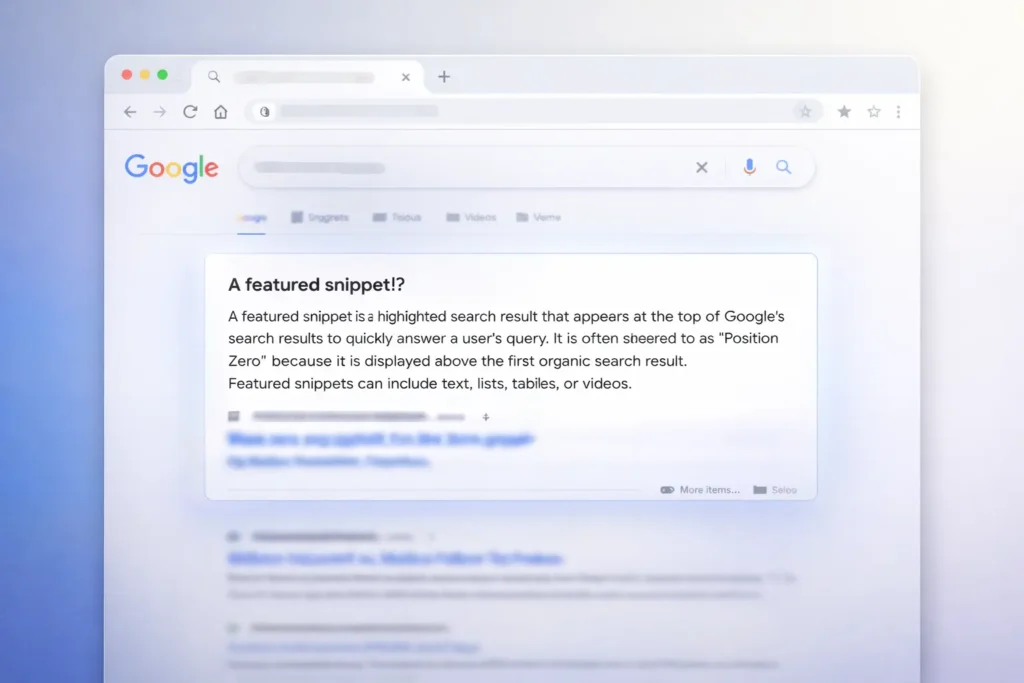
- Having your content selected as a featured snippet significantly increases your website’s visibility and traffic.
The best part is that you don’t have to pay for it or be the best in your field; all you have to do is smartly optimise the featured snippet SEO.
Why Google Uses Featured Snippets for SEO?
💰To motivate users to conduct more frequent searches on Google.
💰They are always improving their algorithms and their capacity to detect search intent in order to enhance the quality of their searches.
💰To deliver content that is quick, reliable, authoritative, and pertinent.
Why Featured Snippets Matter for SEO?
A featured snippet SEO places your content at “position zero.”
Additionally, this doubles your advantages, such as
✔️Significantly raises the website’s search engine ranking.
✔️Boosts organic CTR even if you don’t have a higher Google ranking.
✔️Increases engagement rates and conversions by capturing voice search traffic.
✔️Gives you a competitive edge, as Google has recommended.
✔️The amount of “zero-click searchers” is increased by the featured snippet’s direct response.
Come on! Let’s dig into an upbeat and in-depth guide on featured snippets.
Types of Featured Snippets
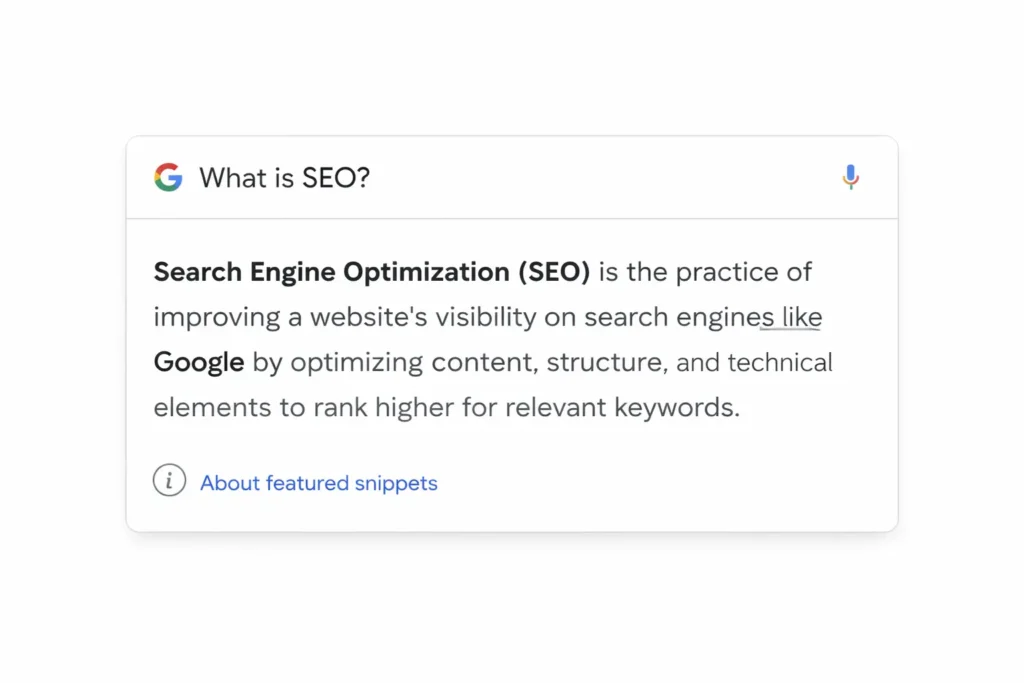
1. Paragraph Snippets
👉Explains a direct concept, provides a concise definition, or answers a specific question in a brief paragraph.
👉For every definition or description, the average word count is between 40-60.
👉Mostly favoured for “What is” questions.
2. List Snippets
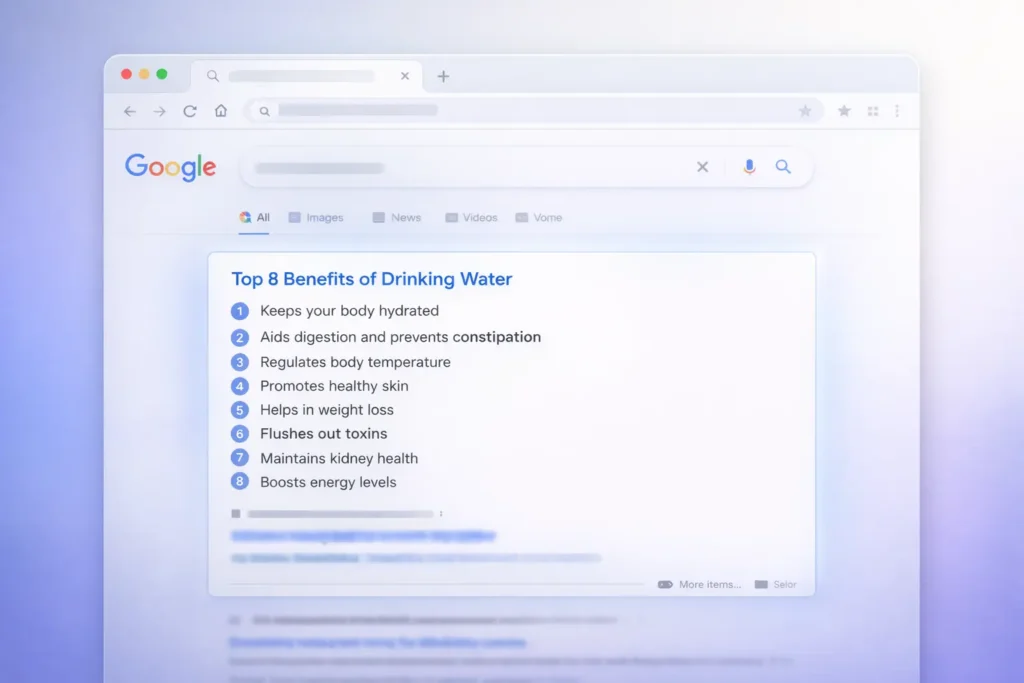
👉Google provides explanations through “ordered lists” like rankings, numbers or bulleted lists, and “unordered lists” for a series of tasks.
👉This info is frequently taken from headers.
👉Uses “How to” queries most of the time.
Examples for ordered list: “Top 10 Amazon items to buy” and “best 5 songs of 2025”.
Example for unordered list: “Top 8 benefits of drinking water”
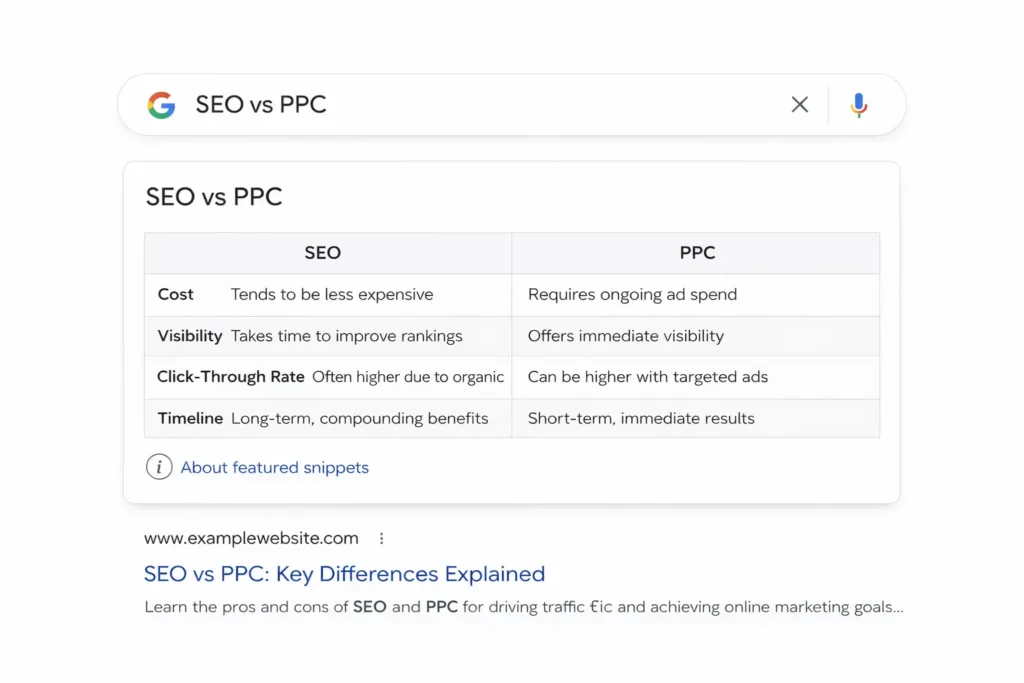
3. Table Snippets
Google presents in a tabular format for rapid reference or easy comparison.
- Provide a straightforward table style with distinct data elements and headings.
- The information must be entirely pertinent to the query.
- Include the desired keywords in both the table’s headline and content.
- Google can easily scan a table that is well-organised.
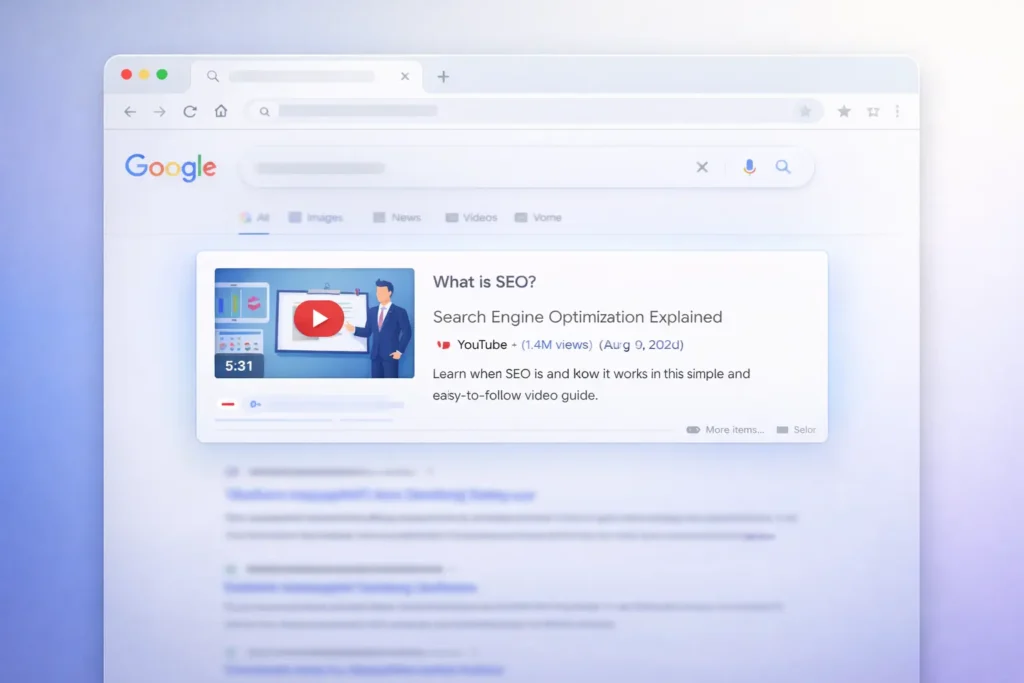
4. Video Snippets
Provides a short video explanation for the query and mostly displayed for action-based queries or “how-to” queries.
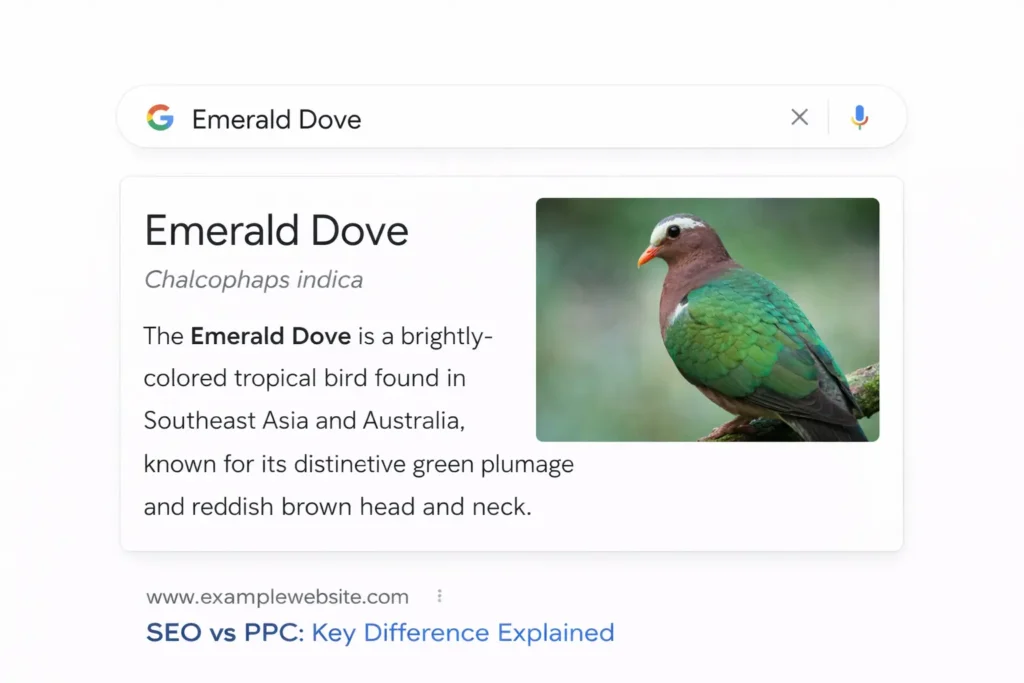
5. Image Snippets
Explains using brief descriptions and pertinent, high-quality photos.
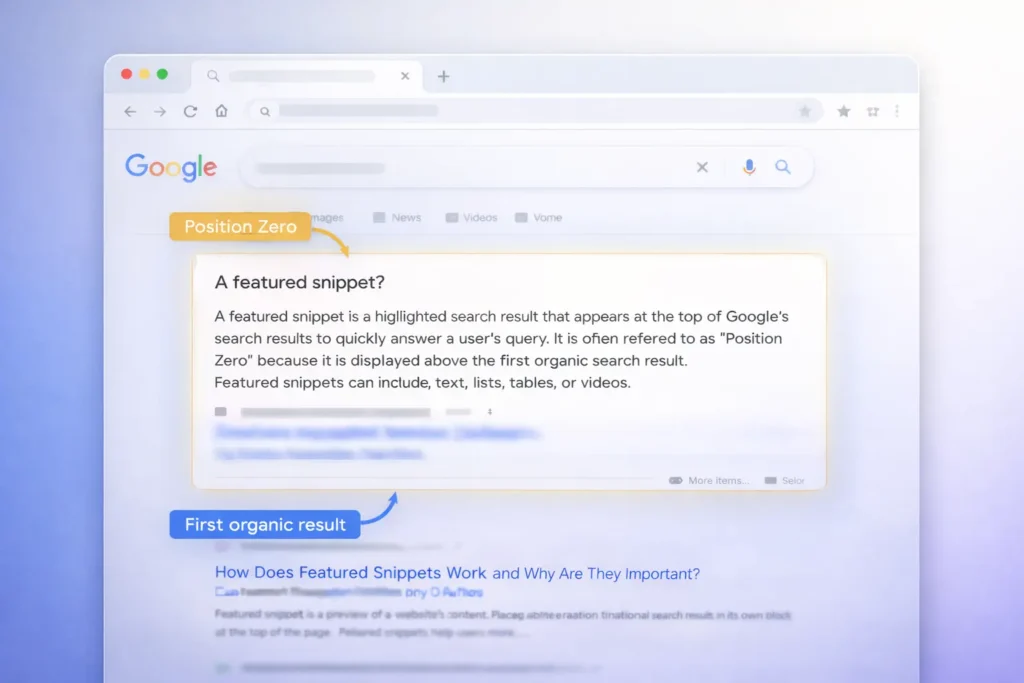
What Is “Position Zero” in Featured Snippet SEO?
Position zero is the featured snippet that appears at the top, even above all of the traditional links, and provides a direct response without requiring a click (zero-click) or website visit.
How to Optimise Content
1. Give a straight response:
Provide a straight response of 40-60 words within the first paragraph of the search query.
Write objectively, like you would if you find answers in a dictionary (direct and instantaneous).
📌For example, what is a featured snippet?
“A featured snippet is” should be the first line of your response.
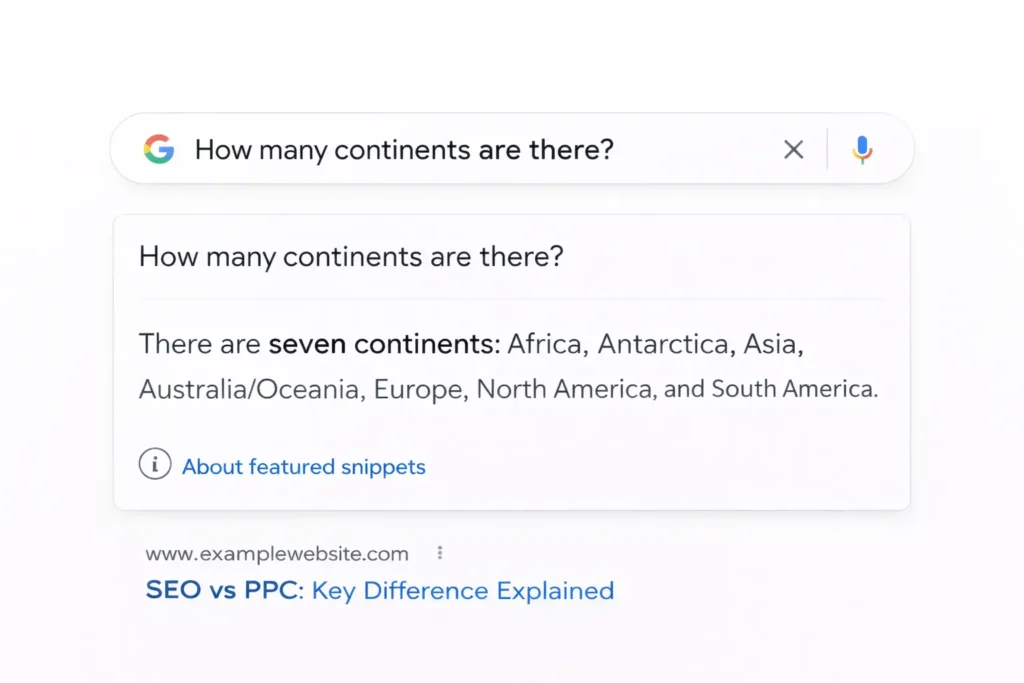
💡Therefore, using this “What is” question type as a subheading in the content is a good idea.
2. Structured headings:
These offer an organised hierarchy, such as H2 and H3 header tags, which help to formulate precise enquiries and divide them into manageable chunks.
This even helps Google comprehend the portions in a pertinent way.
📌H1: An example of a “How to” inquiry
H1- How to get optimised for a featured snippet? (Main Title)
H2-What is a featured snippet? (Subheading)
H3-Describe the features required for optimisation.(explained under the subheading)
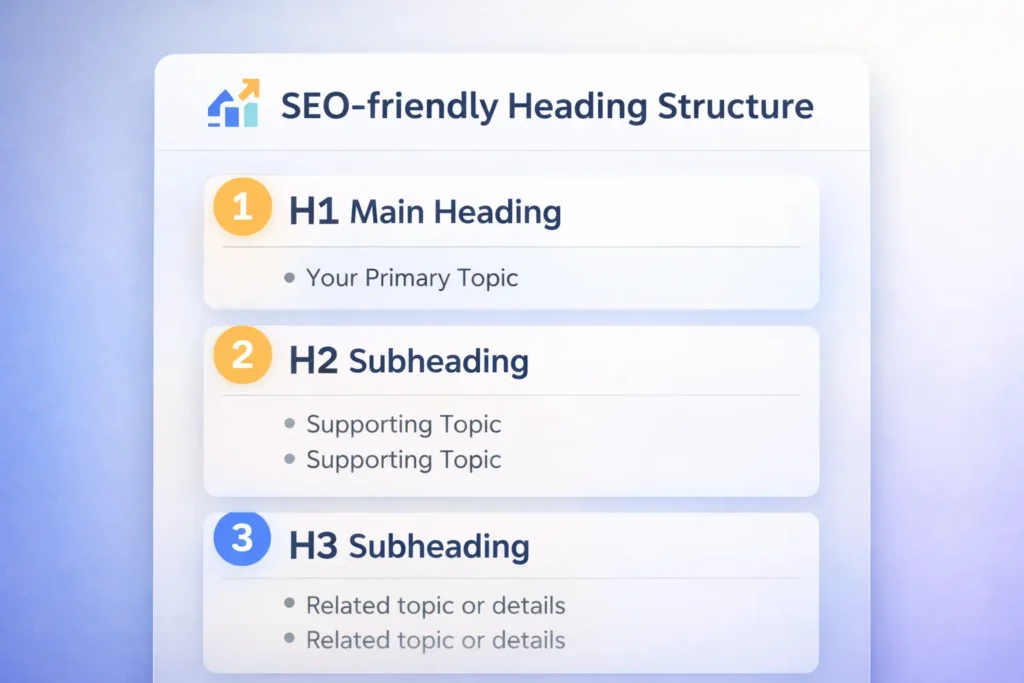
Using a clear hierarchy of H2 and H3 headings is essential for Featured Snippet SEO, and following a Perfect Blog Structure for SEO helps Google easily scan, extract, and display your answers in Position Zero.
3. Adding lists and tables:
It is smart to add lists, numbers, tables, and steps (Step #1, Step #2, or 1, 2) beneath H3 to make it easier for Google to comprehend and highlight.
4. Long-tail keywords:
Encompassing question-based phrases, can aid in being selected as a featured snippet. These keywords are detailed, exactly addressing the user’s intent.
📌Example:
Traditional keyword search: Meta tags
Long-tail keyword search: “How to optimise meta tags?” Or “What is meta tag optimisation?”
Therefore, it is always a good idea to optimise your content for several long-tail terms.
Targeting question-based long-tail queries becomes more effective when you apply the principles explained in Keyword Research for Beginners, especially for queries that already trigger featured snippets or People Also Ask results.
5. Search intent:
Determine the purpose of the user’s query and provide content that directly responds to it using factual information.
💡Therefore, make an effort to create one potential piece of content that responds to numerous user-related queries.
6. Schema markup:
With the right tools, adding schema markup to your website is simple.
7. Visual content:
Add relevant high-quality videos and descriptive alt text for images. Optimising image/video titles, descriptions, and chapters with relevant keywords is a plus.
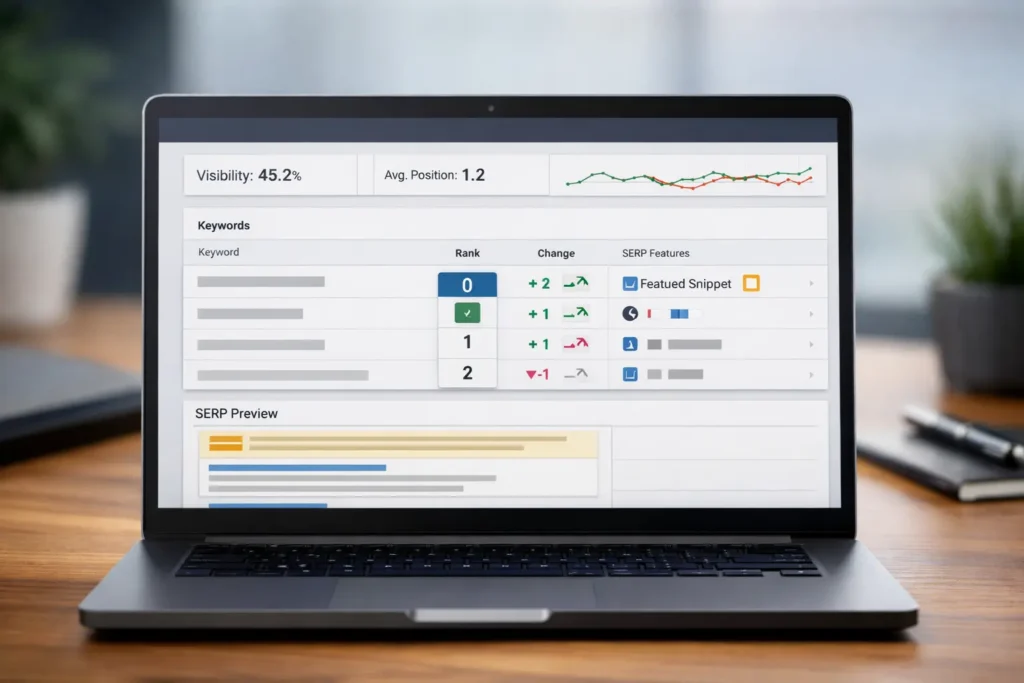
8. Monitor your optimisation progress:
Find out what content is performing well and what isn’t, as well as why.
This will provide you with a plethora of fresh options to attempt and improve your search results.
💡Try utilizing the “already featured” option in Semrush’s position tracking tool.
Common Mistakes While Optimizing for Featured Snippets
✔️Steer clear of lengthy responses, extraneous content, and insufficient information.
✔️Avoid improper format and poor hierarchical utilization.
✔️Not focusing on important, specific questions.
✔️Ignoring the user’s intent and avoiding target keyword research.
✔️Excluding the schema markup.
Real Examples
Example #1
A popular online study school wanted to boost their organic traffic.
- As the foundation of their traffic-building approach, their marketing team, Eddy SEO team, chose a few worthwhile pieces of school content and refined them to target particular, high-value keywords.
- Selected pertinent direct responses to search queries and reorganized the content to focus on long-tail keywords.
- Tables, lists with bullets, and brief paragraphs were used to optimize the text.
- To lure Google’s search algorithm, snippet baits were added.
Results,
They were able to provide some amazing outcomes, such as
- 127% increase in organic traffic.
- Coveted 17 highlights.
- The number of page views rose to almost 60%.
Example#2
Brainly is a well-known online community and learning platform that offers AI-generated study materials and tutors.
- Their marketing team, AIOSEO, included snippet-worthy strategies and delivered amazing results within a year.
- Keyword rankings have tripled and acquired 127.3K question-answer rankings.
- Implemented Q&A schema markup on every question page.
- Increased dramatic rankings in Google’s People Also Ask section –from 138 PAA ranking to 466K.
- Generated 54.9K position zero for their content.
- Unlocked a new level of search visibility and developed a great niche authority for them.
How to Find Featured Snippet Opportunities
👉Determine the search queries that people in your target market are using.
👉Determine which particular keywords can cause a featured snippet by analysing SERP properties.
👉Check the keyword ranking for your selected target keywords.
👉Search for your keyword on Google to see if it already has a featured snippet.
So, once you have found a featured snippet for your target keyword, you can now easily understand the snippet format and its structure.
Accordingly, you can optimize your content’s structure and enhance its value, making it snippet-worthy.
👉Tools like Semrush, Ahrefs, and their advanced filters help to identify existing snippet opportunities, organic keywords analysis, and they help to find those queries that already have a featured snippet in the search results.
Tools like Semrush and Ahrefs help identify snippet-ready keywords more effectively when combined with a solid understanding of Keyword Research for Beginners and SERP intent analysis.
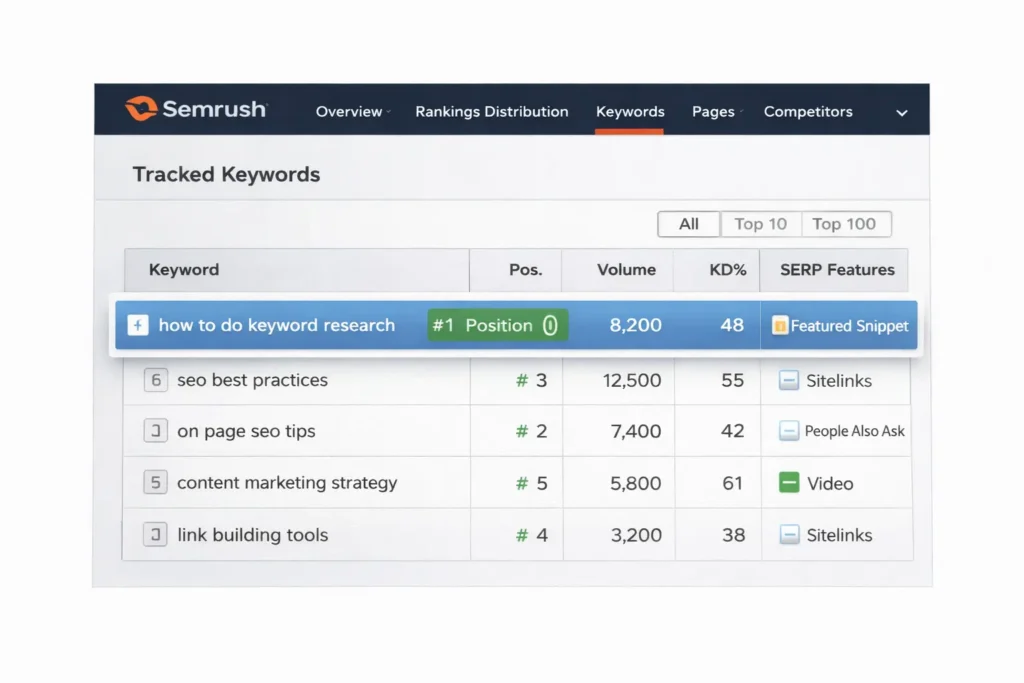
👉Featured snippets are more likely to be triggered by long-tail keywords and keywords with “wh” query phrases.
👉To find the most effective long-tail keywords, focus on the PAA (People Also Ask) parts. A PAA question can also be used as your title or H2/H3.
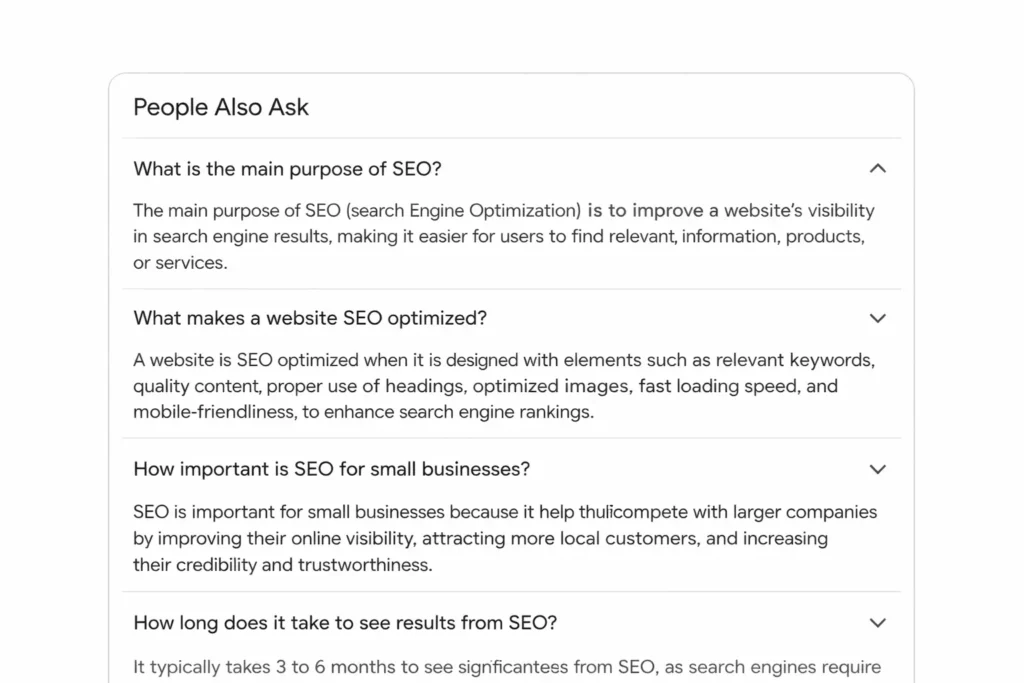
👉Use AnswerThePublic to discover all the questions your audience may have about your subject and to generate ideas for content.
👉You can also study other top-ranking pages and try utilizing your competitor’s domain in an SEO tool to hunt for all the keywords that rank in position zero.
🎯In order to covet the featured snippet spot, focus on keywords that will increase your content’s ranking, mostly on the first page.
Specific Snippet Requirements
- Providing brevity paragraph answers of 40-60 words in length is considered ideal.
- Snippet-ready paragraphs-Providing clear, direct, short answers with relevant keywords for the queries.
- H2/H3 structures: Placing the primary questions on the H2 tag and the supporting questions on the H3 tag enhances readability, SEO, and ease of comprehension.
📌Example: for the title “How to optimize meta tags?”
Some H2 tags can be like,
H2: What are meta tags?
H2: Why are they important for SEO?
H3 tags can be like,
H3: How to include target keywords in meta tags?
H3: How to write meta tags for SEO?
Schema Mark-up Guidance
- The initial step is to choose the most suitable schema type (such as a How To or FAQ site).
- The FAQ schema displays that explicitly addresses frequently asked questions.
- The How To schema often emphasizes all the step-by-step details.
- The next step is to provide content that is clear, well-organized, and formatted in JSON-LD for the schema markup type.
- Lastly, use Google Search Console, Schema Markup Validator, or Google’s Rich Results Test to verify and track your schema markup and make necessary updates.
🎯This makes it easier for search engines to comprehend your material and directs them to covet position zero.
Tracking & Measuring Snippet Performance
👉It includes regular monitoring and analysis through Google Search Console and various SEO tools and rank tracking tools.
👉Your material can then be optimized for featured snippets SEO using the insights gained from these performances.
- Locate the search analytics report in the Google Search Console,
- Select the performance report.
- To locate the keywords that rank on the first page, click the position box and filter all of your queries.
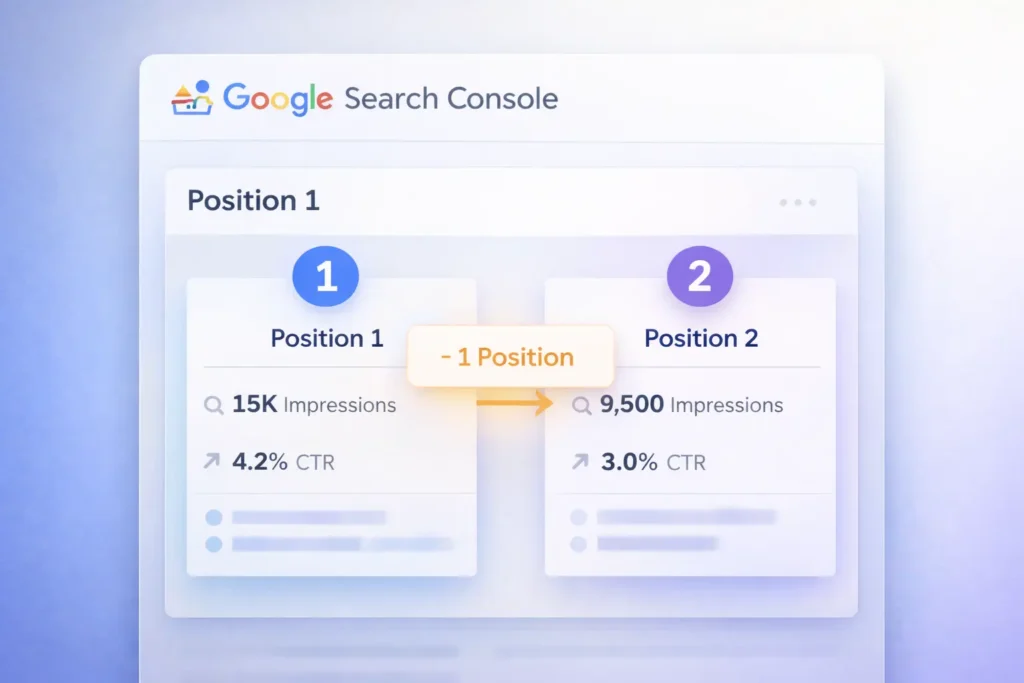
- Click the search appearance now, then look for any featured snippet appearances on the search results page.
- Check for high or low CTR by keeping an eye on it.
- Monitor impressions and see whether your reach has decreased or increased.
💡The comparison insights that we get from the performance report help to study the impact of your content, its optimisation and overall performance on featured snippets visibility.
Voice Search Optimisation Link
Research has proven that 40% of voice search answers are directly derived from featured snippets, as all the digital assistants are programmed like that.
Are you aware of the reason?
✔️Featured snippets offer a straightforward format for questions and answers.
✔️The information is authoritative and succinct.
✔️ Includes easily comprehensible specific texts or listings.
✔️ Fast and no-click responses
Update/Maintenance Strategy
Because snippets can vanish at any time, it is imperative that snippet techniques be updated and re-optimised regularly.
🤔Reason for disappearance
📝Perhaps as a result of modifications to Google’s algorithm
📝The content may be out of date.
📝There might be some technical problems.
📝It’s possible that user behaviour signals gave your rivals that position.
📝There may have been a policy violation.
🧠How to regain snippets
✔️Analyze, update and optimize your website regularly.
✔️Make sure your content is original and of high quality, focusing on the what, how, and why questions.
✔️Improve your SEO tactics and carry out technological optimization.
✔️Make use of the URL inspection tool, select “request indexing,” make changes to your sitemap, and ask Google to re-crawl your website.
✔️Use Google Search Console or other ranking tools to analyse your competition and monitor their performance.
📌 Most Read on Digistir360:
Final Takeaway
- A featured snippet is a search preview that displays a quick, concise, relevant, and immediate answer.
- Of many different types of Google’s SERP features, Position Zero is indeed a valuable tactic for Google to increase their ad revenue.
- Position zero is the featured snippet SEO appearing at the top position and enhances the content’s authority, site’s credibility, and reinforces brand recognition.
- Paragraphs, lists, tables, videos, and images are all types of featured snippets.
- Optimize structured content with clear headings, lists, question heading tags and concise answers.
- Adding markup to different types of schema, like FAQ pages, tables, and How To, will definitely boost your content to become a rich snippet.
- Image optimization and video optimization should be prudently done.
- Match the existing featured snippet– look at some of the previous featured snippets and attempt to improve your content to meet their category or even more to have it featured.
- Based on SERPs, experiment with fresh key points, make minor tweaks, and regularly check your keyword ranking.
- Utilize tools to track your performance regularly and make any adjustments to your snippet-worthy strategy.
- Try ranking on the first page of Google with the best on-page SEO, as most of the featured snippets pull out content from those already on the first page.
Conclusion
Do you wish to,
✔️Significantly improve your credibility and visibility?
✔️Increase organic traffic and click-through rate (CTR)
✔️Want to take the #1 spot?
👉Then use plenty of clear definitions, tactics, and formats that are worthy of snippets to scale up your content.
👉And prompt Google to select your content as the featured snippet for your target keyword.
👉Continue honing your snippet strategies to take that position Zero place.
Yes, it’s difficult, but with digistir360’s holistic approach to content and SEO, you will succeed in it seamlessly.
If this guide helped, read this next:
- Beginner: Top 10 Digital Marketing Questions
- Advanced: Local SEO for Voice Search