
Hey Google, “Find the best yoga classes near me.”
This is no longer a futuristic scenario — it’s how customers search right now.
When someone makes a voice search like this, Google doesn’t show ten blue links.
It shows a short list of nearby businesses — or sometimes just one answer.
As a yoga class instructor (or any local business owner), you might be wondering:
“Why isn’t my business showing up — even though I’ve created a Google Business Profile and filled in all the details?”
The truth is simple.
Only businesses that follow Local SEO guidelines optimized for voice search get priority.
If you’re new to SEO or just starting to understand how voice search works, you’re in the right place.
👉 Read next: Beginner SEO Guide – How to Rank on Google in 2026
By the end of this guide, you’ll know exactly how to optimize your business for “near me” voice searches, improve Google Maps visibility, and attract more local customers — step by step.
📌 What You’ll Learn in This Guide:
Voice search isn’t just a trend — it’s changing how people discover local businesses.
To understand why optimizing for voice search is no longer optional, let’s look at how search behavior is evolving.
Future of Search Trends
Welcome to the future where you can ask your device anything- from the meaning of life to the best pasta toppings-without even lifting a finger.

Hey Siri, find a mechanical shop near me?
Hey Alexa, find a nearby good pizza restaurant and tell me their best seller?
These voice searches near me have become the new standard and have significantly increased foot traffic for nearby establishments.
Voice search statistics 2026
According to the voice search statistics data analysis,
✅ 8.4 billion voice assistants (Siri, Alexa, and Google Assistant) are currently in use worldwide.
✅ Nearly 27% of individuals use voice search on their mobile devices.
✅ 76% voice searches are for “near me” and local businesses.
✅ 88% of users either visit or call the local business after a search.
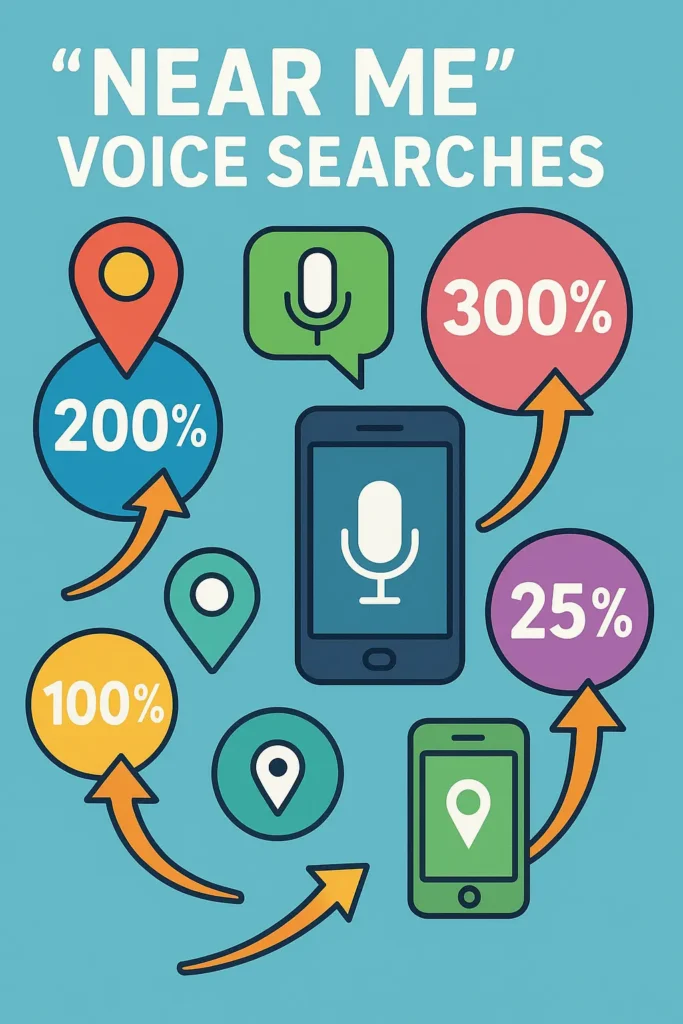
These statistics clearly demonstrate how voice search is becoming a part of people’s everyday lives and is transforming local SEO in 2026 and beyond.
If your online store has still not optimized its business listing for local seo, you are clearly lagging.
But fret not, our next section explains all the guidelines for local SEO.
The numbers clearly show one thing — people are no longer typing local searches, they’re speaking them.
Now let’s break down how you can optimize your business to appear in these voice-driven “near me” results
| Factor | Traditional Local SEO | Voice Search SEO |
|---|---|---|
| Query style | Short & typed | Conversational |
| Keyword type | Generic | Long-tail |
| Result format | Multiple links | Single answer |
| User intent | Research | Immediate action |
How to Optimize for ‘’Near Me” Voice Searches
Speaking to voice assistants is not the same as typing into a search bar. Voice search optimisation follows a different roadmap altogether compared to traditional search guidelines.
1. Incorporate Conversational Keywords
👉Natural language phrases, conversational or long-tail keywords, question-based and intent-driven phrases are the best for voice searches.
Voice queries are usually longer and more conversational compared to typed searches. Understanding the difference between voice search vs text search helps you align your content with real user behavior.
👉Instead of including “ladies salon” or “salon near me”, use phrases like “The best luxury salon near me?” or “Wordclass haircut services in your nearest ladies salon”.
2. Target Featured Snippets
- Content must be up-to-date and should directly address the local issues.
- Use direct responses, numbered lists, and bullet points.
- Optimise your headings and layout to match snippets that respond to “near me” voice queries.
3. Implement Advanced Schema Markup
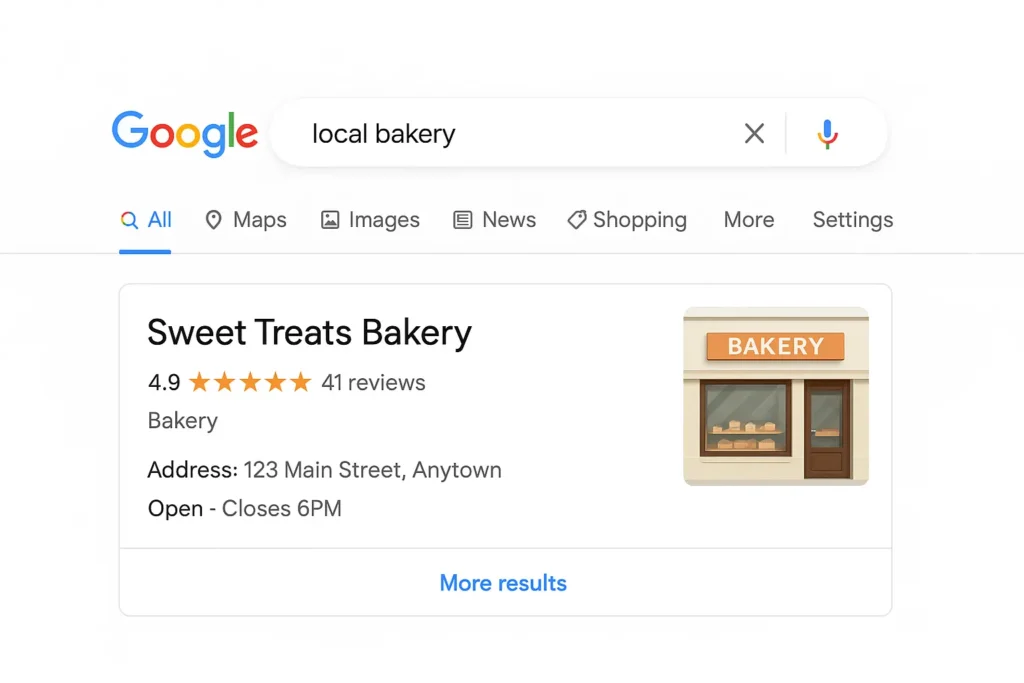
👉 Utilize LocalBusiness structured data to enter all the details about your business (address, phone number, business hours, products, reviews, ratings, and geo-coordinates).
👉Incorporate the right FAQ Schema Markup- FAQs always add value, and address frequently asked voice search queries.
👉Ensure schema markup is up-to-date every time.
4. Enhance Page Speed
- Compress files
- Optimise images
- Employ browser caching.
5. User Experience
👉An understandable layout
👉Streamlined navigation.
6. Contextual and Personalization Strategies
- Personalization strategies- Consider user preferences, previous interactions, and industry trends.
- Contextual Strategies- Give customized answers that address the pain areas based on the context you create.
7. Utilizing Voice Search Metrics
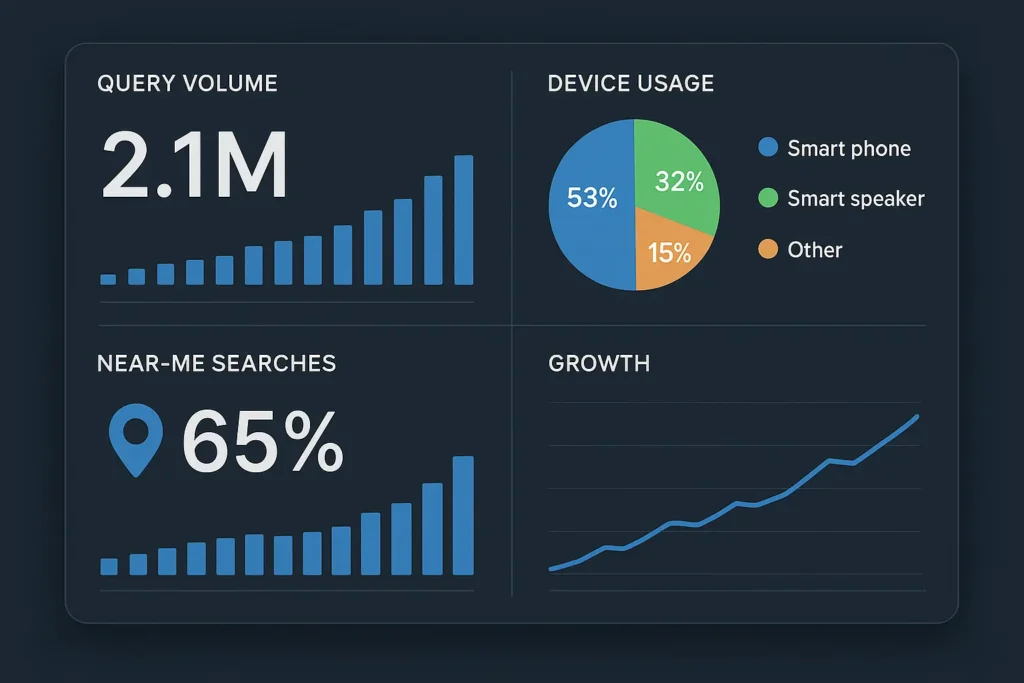
👉Use tools like Google Analytics and Google Search Console.
👉Identify what is required and what works for all your content and strategies.
👉Regularly monitor and assess voice search traffic, query kinds, and user behavior patterns.
👉Determine the altering needs of the voice search trend.
❗ Common Mistakes Businesses Make With Voice Search SEO
Even after following basic local SEO practices, many businesses fail to appear in voice search results — not because they’re doing nothing, but because they’re doing a few critical things wrong.
Here are the most common mistakes to avoid:
❌ 1. Ignoring Conversational Search Intent
Many businesses still optimize only for short, typed keywords like “yoga class” or “salon near me”.
Voice searches are different.
People speak in full questions, such as:
- “Where is the best yoga class near me?”
- “Which salon offers affordable haircuts nearby?”
If your content doesn’t match how people actually speak, voice assistants won’t pick it up.
❌ 2. Not Optimizing Google Business Profile Properly
Simply creating a Google Business Profile isn’t enough.
Common issues include:
- Incomplete business information
- Outdated opening hours
- No photos or recent updates
- Ignoring reviews
For voice searches, Google heavily relies on accurate and active GBP profiles to decide which business to recommend.
❌ 3. Skipping FAQ and Schema Markup
Voice assistants prefer clear, structured answers.
If your website lacks:
- FAQ sections
- FAQ schema markup
- LocalBusiness schema
…it becomes harder for search engines to understand and read your content aloud in voice results.
❌ 4. Focusing Only on Keywords, Not Context
Voice search is context-driven.
Google considers:
- User location
- Time of day
- Search intent
- Device used
Businesses that stuff keywords without creating contextual, helpful content often miss out on voice visibility.
❌ 5. Poor Mobile Experience and Slow Page Speed
Most voice searches happen on mobile devices.
If your website:
- Loads slowly
- Isn’t mobile-friendly
- Has confusing navigation
users (and search engines) won’t trust it — and your chances of ranking for voice search drop significantly.
❌ 6. Inconsistent NAP Details Across Platforms
Inconsistent Name, Address, and Phone Number (NAP) details confuse search engines.
If your business information differs across:
- Google Maps
- Directories
- Website
- Social profiles
Google may hesitate to recommend your business for local voice queries.
💡 Pro Tip
Fixing even two or three of these mistakes can dramatically improve your visibility in “near me” voice searches — especially for local businesses competing in crowded areas.
Optimizing content alone isn’t enough.
For local voice searches, Google Maps plays a critical role in deciding who shows up first.
Here’s how to strengthen your Google Maps visibility step by step.
Step-by-Step Techniques for Improving Google Maps Visibility, Local Citations, and Voice-Friendly Content
To improve the web visibility of any local business, the following steps are necessary.
Improving Google Maps Visibility
Step 1- Optimizing Google Business Profile (GBP)
- Claim and verify– Look up your company on Google Maps and Click “Own this business?” to begin the verification process if it hasn’t been claimed.
- Provide accurate and consistent NAP (Name, Address, Phone number) details everywhere.
- Provide a compelling business description that is keyword-rich.
- Add your social media account links and increase your brand reach.
- Engage your profile by regularly updating high-quality photos and videos of your company, products, and team members.
- Use the GMP Posts tool and actively share campaigns, offers, events, and promotions directly on your profile.
Step 2: Review Management
- Attempt to get positive feedback from your happy customers by providing them with direct links.
- Make an effort to respond to each review promptly.
- Use your evaluations and comments to find and fix service gaps.
- Enhance user engagement by enabling “messaging on your GBP”, so that customers can directly message you their queries.
Step 3: Local Keyword Optimisation
- Incorporate local or location-specific keywords naturally into the headers, meta descriptions, services, and posts of your website.
- Making location-specific sites is a smart idea if you provide services in several locations.
💡TIP: Use terms like “Delicious pizza restaurant in Annanagar” and “Emergency electrician in Matunga” instead of just “pizza restaurant” and “electrical services” to notify your specialization to users and to Google.
Step 4: Build Local Backlinks and Citations
- List your business in the local directories like Google My Business, Facebook, Bing Places, Yelp, and Apple Maps.
- Ensure consistency of your NAP details.
- Embed a Google map on your site so that customers can easily find your location.
Step 5: Include structured data schema markup and prepare your site for rich results.
Building Local Citations
☑️Step 1: Locate pertinent industry-specific websites, high-authority local directories, and key platforms.
☑️Step 2: Distribute your company’s information to numerous smaller directories and GPS systems using data aggregators or providers.
☑️Step 3: Get industry-specific citations and local, high-quality backlinks by registering with your local business associations and in specialised directories.
☑️Step 4: Create a mobile–friendly website with accurate and consistent NAP details in all citations. This builds trust with search engines.
☑️Step 5: Regularly monitor, audit, and update the citations.
☑️Step 6: Use citation management software such as Moz Local, BrightLocal, and Whitespark to effectively manage citations.
Embrace Voice-Friendly Content
👉Step 1: Use simple Q & A formats, embrace conversational tone, and natural speech phrases for your content, and avoid technical jargon.
👉Step 2: Address typical issues to optimise for local voice searches.
👉Step 3: Use conversational and long-tail keywords such as “what, where, why, and how.”
👉Step 4: Incorporate near-me and location-specific terms.
👉Step 5: Focus on featured snippets by organising the content and providing direct responses.
👉Step 6: Establish structure by using organised bullet points, numbered lists, and crisp paragraphs.
👉Step 7: Use schema markup for voice assistants to comprehend easily.
👉Step 8: Make a mobile-friendly website that loads quickly.
📍 Real-World Case Studies: Voice Search in Action
Local Café (Neighborhood Coffee Shop)
- Challenge: Not showing up when people asked, “Where’s a good coffee shop near me?”
- Strategy: Optimized Google Business Profile, added conversational FAQs like “Do you open early?” and ensured consistent NAP details across directories.
- Results: 32% increase in direction requests and a noticeable rise in morning walk-in traffic within 6 weeks.
Physiotherapy Clinic (Urban Area)
- Challenge: Competing with larger clinics for “near me” voice searches.
- Strategy: Created voice-friendly service pages with question-based headings, added FAQ schema, and improved mobile page speed.
- Results: 41% growth in phone calls from mobile search and top-three visibility for multiple local voice queries.
If you’re new to digital marketing, this beginner-friendly guide explains how local SEO fits into your overall online strategy → Digital Marketing for Beginners: How to Reach Customers Online.
These strategies may sound powerful in theory — but do they work in the real world?
Let’s look at real local businesses that used voice search and local SEO to achieve measurable growth.
Real-World Examples of Local Businesses
💡The true benefits of voice SEO for local brands are demonstrated by these case studies.
Case study 1: “Sofas 2 Furnishings”
Sofas 2 Furnishings is a local furniture store located in Simi Valley, California. Their store was running well, but their website was lacking visibility and had hardly any customers.
Challenge: They wanted to capture more local voice search traffic and boost their online sale.
Strategy Followed:
- Thorough SEO Audit of their existing SEO performance.
- Targeting easy-win keywords, Local keywords, and added target cities to their product pages, optimised web copy, and lots of link-building.
- Adding backlinks to shippable products.
- A combination of new backlinks and link placements.
- Optimised GBP and ensured their NAP details were consistent and accurate.
Results:
- Within nine months, sofas 2 furnishings appeared in the rank#1 for several voice search queries and on the SERPs.
- Huge boosts to organic traffic, keyword ranking, ecommerce, and voice searches.
- 1.1k traffic increase in just six months.
Case Study 2: Premier Wellness Florida
They optimised their content to focus on local SEO and voice search, which resulted in a 300% increase in organic traffic, with 20 keywords ranked in the top three positions on Google.
Ref: https://www.seodiscovery.com/local-portfolio.php
By combining voice search optimization with local SEO and strategy, both local brands were able to gain significant advantages.
Key Takeaways
- Voice search is the future of search trends.
- Voice search is preferred over typing by 71% of users. (As voice assistants driven by AI are now much more adept at comprehending context, tone, and intent).
- The rising proportion of local searches emphasizes how crucial local SEO is for businesses.
- Establishing yourself as the top priority for voice enquiries is really important if you are a local businessperson.
- Even for small firms with tight budgets, optimising for “near me” voice searches can be a profitable investment with the correct strategies.
✔️ Incorporate long-tail keywords
✔️ Target featured snippets
✔️ Implement advanced schema markup
- Follow our Step-by-Step Techniques for Improving Google Maps Visibility, Local Citations and Voice-Friendly Content
🔑 Quick Recap
- Voice search is rapidly becoming the default way users find local businesses.
- Most voice searches are “near me” and intent-driven.
- Google Maps visibility is crucial for voice search success.
- Conversational keywords, schema markup, and mobile speed matter more than ever.
- Even small local businesses can compete with the right local SEO strategy
Conclusion
In the realm of local SEO, make sure your company stands out by providing just what customers want.
Leverage voice search near-me queries and boost your business ranking with voice-activated content.
👉Discover the secrets of voice search optimization and local SEO with digistir360, and create a dedicated local marketing strategy.
Read Here: How to create a digital marketing plan that actually works.
Connect with Digistir360 and scale your search engine rankings today!
- If this guide helped, read this next:
- 👉 Beginner: Perfect Blog Structure for SEO: Boost Rankings, AEO & Readability
- 👉 Advanced: What Is Answer Engine Optimization (AEO)?